
 Reviews
Quick Verdict
| Overall Rating | ⭐⭐⭐⭐⭐⭐⭐⭐⭐☆ (9.2/10) |
| Best For | Hobbyists, Engineers, Makers, Small Businesses |
| Printer Type | High-Speed CoreXY 3D Printers |
| Top Models | QIDI Plus4, QIDI Q1 Pro, X-Max 3 |
| Materials | PLA, PETG, ABS, ASA, Nylon, Carbon Fiber, PC and more |
Introduction
The desktop 3D printer market has changed dramatically over the past few years. What was once a hobby requiring endless calibration has evolved into an ecosystem of machines capable of producing professional-quality parts with minimal effort. QIDI Tech has been one of the companies driving that transformation. Known for manufacturing enclosed CoreXY printers that balance speed, reliability, and affordability, QIDI has steadily built a loyal following among hobbyists, engineers, educators, and small businesses. If you've been researching printers like the QIDI Plus4 or QIDI Q1 Pro, you've probably also compared them with Bambu Lab and Creality. That's exactly where this review comes in. In this detailed QIDI Tech Review, we'll examine the company's most popular printers, real-world performance, software, print quality, value for money, and how QIDI compares with its biggest competitors. By the end, you'll know whether QIDI is the right investment for your needs.
What is QIDI Tech?
Founded in China, QIDI Tech specializes in manufacturing consumer and professional desktop 3D printers designed for reliability and ease of use. Unlike many budget-focused manufacturers, QIDI has concentrated on creating enclosed CoreXY printers capable of printing both everyday filaments and advanced engineering materials. Its lineup now includes printers suitable for:
- Beginners entering 3D printing
- Makers and hobbyists
- Product designers
- Engineers
- Schools
- Small manufacturing businesses
Rather than chasing flashy features, QIDI focuses on solving real-world printing problems through improved motion systems, enclosed heated chambers, better extrusion systems, and continuous firmware updates. This practical approach has helped the company establish a strong reputation among experienced makers looking for dependable machines.
Key Features
CoreXY Motion System
One of the biggest reasons QIDI printers stand out is their use of the CoreXY motion system. Unlike traditional Cartesian printers, CoreXY designs reduce moving mass, allowing significantly higher print speeds while maintaining impressive accuracy. The result is smoother walls, faster production times, and better dimensional consistency. Whether you're producing prototypes or functional components, the faster movement system dramatically reduces waiting time without sacrificing quality.
Heated Enclosed Chamber
Many desktop printers struggle when printing advanced materials such as:
- Nylon
- ABS
- ASA
- Polycarbonate
- Carbon Fiber composites
Temperature fluctuations often cause warping and layer separation. QIDI addresses this with enclosed chambers that maintain a stable printing environment, improving adhesion and reducing print failures. For engineers producing functional parts, this feature alone can justify choosing QIDI over open-frame alternatives.
Automatic Bed Leveling
Bed leveling has traditionally been one of the most frustrating parts of 3D printing. QIDI's automatic leveling system greatly simplifies setup by creating a mesh of the print surface and compensating for minor imperfections. This improves first-layer consistency, which remains one of the most important factors in successful printing. Instead of manually adjusting knobs before every print, users can spend more time designing and less time troubleshooting.
High-Speed Printing
Modern QIDI printers routinely achieve printing speeds exceeding 500 mm/s under suitable conditions. Of course, maximum speed isn't everything. More importantly, QIDI maintains surprisingly consistent print quality even at elevated speeds, making it a practical solution for users who value both productivity and precision.
Dual Cooling System
Efficient cooling plays a major role in print quality. QIDI incorporates advanced cooling systems that help maintain sharp overhangs, clean bridges, and crisp surface finishes. This becomes especially noticeable when printing complex models containing intricate geometry.
Material Compatibility
One area where QIDI consistently impresses is filament compatibility. Supported materials include:
- PLA
- PLA+
- PETG
- TPU
- ABS
- ASA
- Nylon
- Polycarbonate
- Carbon Fiber reinforced filaments
- Glass Fiber composites
This versatility makes QIDI particularly attractive for engineering applications rather than just decorative printing.
QIDI Studio Software
QIDI Studio provides a streamlined slicing experience while remaining compatible with popular workflows.
The software includes:
- Material profiles
- Print monitoring
- Automatic supports
- Tree supports
- Calibration options
- Speed optimization
Experienced users can still leverage advanced settings, while beginners benefit from sensible defaults that reduce the learning curve.
First Impressions
Unboxing a QIDI printer immediately gives the impression of a well-engineered product. Components are securely packed, clearly labeled, and protected with dense foam inserts that minimize the risk of shipping damage. Assembly is refreshingly straightforward compared with many competing printers. Most modern QIDI models arrive largely pre-assembled, requiring only a handful of steps before the first calibration. The included accessories such as tools, spare parts, and sample filament are thoughtfully organized, making the setup process approachable even for first-time users. The industrial design also stands out. Rather than emphasizing flashy aesthetics, QIDI focuses on a clean, functional appearance with a sturdy metal frame and enclosed build chamber. This not only enhances durability but also helps maintain stable temperatures during prints, especially when working with engineering-grade materials.
The touchscreen interface feels responsive and intuitive. Navigating menus, loading filament, and initiating calibration are all straightforward, reducing the intimidation factor that many beginners experience with desktop 3D printers. Initial calibration is largely automated thanks to the built-in bed leveling system. Within a short time, most users can begin their first print without extensive manual adjustments. This smooth out-of-the-box experience sets a positive tone and reflects QIDI's emphasis on usability. Perhaps the most impressive first impression comes from the initial print quality. Even with the included default profiles, printed models typically exhibit clean layer lines, strong adhesion, and accurate dimensions. While advanced users may still fine-tune settings for specific materials, the factory presets deliver reliable results that inspire confidence from the very first print.
Real-World Performance
Specifications only tell part of the story. The real question is how QIDI printers perform after weeks or months of regular use. After evaluating user experiences, expert reviews, and the capabilities of QIDI's latest lineup, it's clear that the company has matured into one of the most dependable names in the desktop 3D printing space. The biggest strength is consistency. Once properly calibrated, QIDI printers are capable of producing high-quality prints repeatedly with minimal intervention. Whether you're printing a single prototype or a batch of functional components, failed prints are relatively uncommon when using recommended material profiles. Another highlight is speed. Thanks to the CoreXY motion system, modern QIDI printers can complete projects much faster than traditional Cartesian machines while still maintaining impressive dimensional accuracy. For makers running multiple projects or small businesses producing parts on demand, those time savings quickly add up. Print quality is equally impressive. Fine details remain sharp, overhangs are well supported, and layer lines are clean, particularly when using PLA, PETG, or ABS. With engineering materials such as Nylon or Carbon Fiber composites, the enclosed heated chamber provides the stable environment needed to reduce warping and improve layer adhesion.
Noise levels are reasonable for a high-speed machine. While no CoreXY printer operating at hundreds of millimeters per second is silent, QIDI's motion system and sturdy frame help minimize excessive vibration. Users working from home or in small workshops will appreciate the relatively refined operation. Maintenance requirements are also manageable. Routine nozzle cleaning, belt inspections, and occasional lubrication are generally all that's needed to keep the printer operating reliably. Replacement parts are readily available, and the company has built a reputation for responsive customer support when issues arise. Software integration continues to improve as well. QIDI Studio offers an accessible interface for beginners while exposing advanced controls for experienced users. Remote monitoring and print management have become more polished over recent software updates, although the ecosystem still isn't quite as comprehensive as Bambu Lab's. Overall, the day-to-day experience feels stable and dependable, which is often more valuable than simply having the fastest machine on paper.
QIDI Plus4 Review
The QIDI Plus4 represents one of the company's most ambitious desktop printers to date. Designed for users who require a larger build volume without sacrificing speed or precision, it strikes an excellent balance between performance and versatility. Its enclosed CoreXY architecture makes it particularly well suited for engineering-grade materials such as ABS, ASA, Nylon, Polycarbonate, and Carbon Fiber composites. The actively heated chamber significantly reduces warping, allowing users to print complex functional parts with greater confidence. In everyday use, the Plus4 delivers excellent dimensional accuracy and clean surface finishes. Large prints benefit from the spacious build volume, while smaller models retain impressive detail thanks to the rigid motion system and well-tuned firmware. The printer is especially attractive for:
- Product designers
- Engineering workshops
- Prototype development
- Educational institutions
- Small manufacturing businesses
Although priced above entry-level machines, the additional capability makes it a worthwhile investment for users who regularly work with demanding materials.
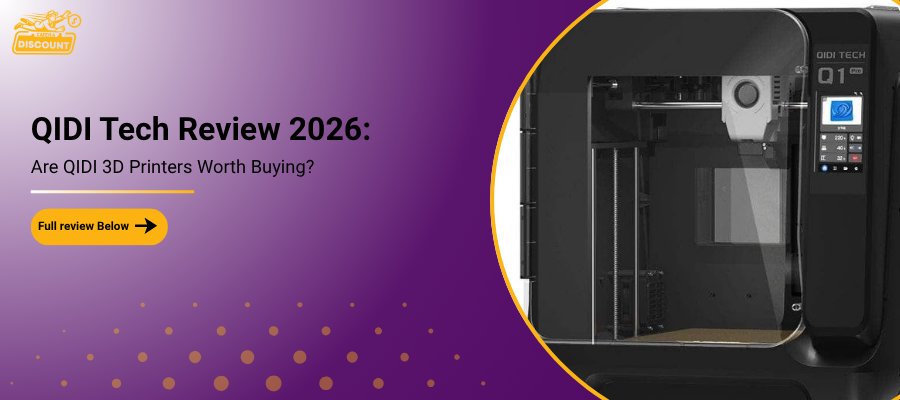
QIDI Q1 Pro Review
The QIDI Q1 Pro targets users looking for premium features at a more accessible price point. Despite its smaller footprint, it retains many of the technologies found in larger QIDI models, including:
- CoreXY motion system
- Automatic bed leveling
- Fully enclosed chamber
- High-speed printing
- Excellent material compatibility
For hobbyists and home makers, the Q1 Pro may actually represent the sweet spot in QIDI's lineup. It offers outstanding print quality while remaining compact enough for a desktop workshop. The printer performs particularly well with PLA, PETG, ABS, and ASA, producing smooth surfaces and reliable first layers with minimal tuning. Its user-friendly interface and simplified setup also make it an excellent choice for users upgrading from entry-level printers.
Pricing & Value Analysis
QIDI has positioned itself in an interesting segment of the market. Rather than competing solely on price, the company focuses on delivering premium features at a cost that remains below many enterprise-level alternatives. Compared with similarly equipped CoreXY printers, QIDI often offers exceptional value. Buyers receive features that were once reserved for much more expensive machines, including enclosed chambers, automatic leveling, high-speed printing, and broad material compatibility. For casual hobbyists printing only occasional decorative models, the investment may feel higher than necessary. However, anyone producing functional parts, engineering prototypes, or small production runs will likely recover that cost through improved reliability and reduced print failures.
Another important factor is long-term ownership. Reliable hardware, accessible replacement parts, and ongoing firmware updates contribute to a lower total cost of ownership over time. When compared with competitors such as Bambu Lab, QIDI sometimes sacrifices ecosystem polish in exchange for stronger engineering-focused capabilities and more competitive pricing. Against Creality, QIDI generally offers a more refined out-of-the-box experience, especially for enclosed high-speed printing. Overall, QIDI delivers strong value for users who prioritize reliability, engineering materials, and consistent performance over flashy marketing features.
Explore BRAND Collections
Pros & Cons
| Pros | Cons |
| Outstanding print quality | Smaller software ecosystem than Bambu Lab |
| Excellent CoreXY performance | Mobile app could be more polished |
| Heated enclosed chamber | Premium models require a higher initial investment |
| Handles engineering materials exceptionally well | Advanced material tuning still benefits from experience |
| Reliable automatic bed leveling | Limited third-party accessories compared to larger ecosystems |
| Durable construction | Build volume varies by model |
| Strong value for money | Firmware updates occasionally require manual installation |
Who Should Buy QIDI?
QIDI printers are an excellent choice for users who need dependable, high-quality results rather than simply chasing the lowest purchase price. Engineers will appreciate the ability to print advanced materials with minimal warping. Product designers can rapidly prototype functional components, while educators benefit from the machines' straightforward setup and reliable operation. Small businesses producing custom parts or short production runs will also find QIDI particularly attractive thanks to its combination of speed, precision, and material flexibility. Even experienced hobbyists looking to upgrade from entry-level printers are likely to notice a substantial improvement in print quality, reliability, and overall workflow.
Recommendation Table
| User Type | Recommendation |
| Beginners | ⭐⭐⭐⭐☆ |
| Hobbyists | ⭐⭐⭐⭐⭐ |
| Engineers | ⭐⭐⭐⭐⭐ |
| Product Designers | ⭐⭐⭐⭐⭐ |
| Small Businesses | ⭐⭐⭐⭐⭐ |
| Schools & Universities | ⭐⭐⭐⭐☆ |
| Professional Workshops | ⭐⭐⭐⭐⭐ |
Who Should Avoid QIDI?
While QIDI performs exceptionally well in many scenarios, it isn't the ideal choice for everyone. If your primary goal is printing simple PLA models on a tight budget, an entry-level printer from Creality or another budget manufacturer may provide better value. Users who place heavy emphasis on cloud connectivity, mobile applications, and an integrated ecosystem may also prefer Bambu Lab's more mature software platform. Finally, individuals who rarely print engineering materials or require only occasional hobby use may not fully benefit from the advanced capabilities offered by QIDI's enclosed CoreXY printers.
Customer Feedback Summary
Across independent review platforms, maker communities, and enthusiast forums, customer feedback on QIDI printers is generally very positive. While experiences naturally vary depending on the model and printing conditions, several recurring themes consistently emerge.
Common Praise
Users frequently highlight the impressive print quality delivered straight out of the box. Many appreciate the minimal setup process, reliable automatic bed leveling, and the ability to print engineering-grade materials without extensive modifications. The enclosed design, sturdy construction, and responsive customer support are also commonly mentioned as standout strengths.
Common Criticisms
Some users note that QIDI's software ecosystem is less polished than Bambu Lab's, particularly when it comes to mobile functionality and cloud-based features. Others mention that advanced materials may still require profile adjustments for optimal results. A few beginners also report a learning curve when experimenting with high-performance filaments.
Overall Community Consensus
The general consensus is that QIDI offers exceptional hardware, dependable performance, and strong value for users who prioritize print quality and engineering capabilities. While its software ecosystem continues to evolve, the company's focus on reliable machines has earned it a loyal and growing user base.
QIDI vs Bambu Lab
Bambu Lab has become one of the most recognizable names in consumer 3D printing, thanks to its polished software ecosystem, cloud connectivity, and high-speed CoreXY printers. Naturally, many buyers compare QIDI against Bambu before making a purchase. If your priority is a seamless plug-and-play experience with advanced remote monitoring, automatic updates, and multi-color printing through the AMS system, Bambu Lab has a clear advantage. Its ecosystem is currently one of the best in the industry.
However, QIDI excels in areas that matter most to engineers and professional makers. The enclosed heated chamber found on many QIDI models provides a more stable environment for printing demanding materials such as Nylon, ASA, Polycarbonate, and Carbon Fiber composites. This makes QIDI particularly appealing for users producing functional parts rather than decorative models. Price is another important factor. Comparable QIDI printers are often more affordable while still delivering excellent print quality, reliability, and speed. For buyers who don't need Bambu's software ecosystem, QIDI offers outstanding value.
Winner
- Best Overall Ecosystem: Bambu Lab
- Best for Engineering Materials: QIDI
- Best Value: QIDI
QIDI vs Creality
Creality remains one of the most popular names in desktop 3D printing, largely because of its wide product range and affordable pricing. Many beginners start with an Ender-series printer before considering an upgrade. Compared with Creality, QIDI provides a significantly more refined experience. Most QIDI printers arrive nearly assembled, include automatic bed leveling, feature enclosed chambers, and require much less tuning before achieving reliable results. Creality still offers excellent budget options, but users often spend additional time upgrading firmware, replacing components, or adjusting print settings. QIDI reduces much of that trial-and-error process by delivering a more polished machine from day one. If you're primarily printing PLA on a limited budget, Creality remains an attractive option. But if reliability, speed, and engineering-grade materials are your priorities, QIDI is the stronger long-term investment.
Winner
- Best Budget Option: Creality
- Best Out-of-the-Box Experience: QIDI
- Best Print Reliability: QIDI
Competitor Comparison Table
| Feature | QIDI Tech | Bambu Lab | Creality |
| Print Quality | ⭐⭐⭐⭐⭐ | ⭐⭐⭐⭐⭐ | ⭐⭐⭐⭐☆ |
| Speed | ⭐⭐⭐⭐⭐ | ⭐⭐⭐⭐⭐ | ⭐⭐⭐⭐☆ |
| Engineering Materials | ⭐⭐⭐⭐⭐ | ⭐⭐⭐⭐☆ | ⭐⭐⭐⭐☆ |
| Ease of Setup | ⭐⭐⭐⭐⭐ | ⭐⭐⭐⭐⭐ | ⭐⭐⭐⭐☆ |
| Software Ecosystem | ⭐⭐⭐⭐☆ | ⭐⭐⭐⭐⭐ | ⭐⭐⭐☆☆ |
| Build Quality | ⭐⭐⭐⭐⭐ | ⭐⭐⭐⭐⭐ | ⭐⭐⭐⭐☆ |
| Value for Money | ⭐⭐⭐⭐⭐ | ⭐⭐⭐⭐☆ | ⭐⭐⭐⭐⭐ |
| Beginner Friendly | ⭐⭐⭐⭐☆ | ⭐⭐⭐⭐⭐ | ⭐⭐⭐⭐☆ |
| Professional Use | ⭐⭐⭐⭐⭐ | ⭐⭐⭐⭐⭐ | ⭐⭐⭐⭐☆ |
Frequently Asked Questions
1. Is QIDI Tech a good 3D printer brand?
Yes. QIDI has earned a strong reputation for producing reliable CoreXY 3D printers with excellent print quality, enclosed chambers, and support for engineering-grade materials. It is widely regarded as one of the best alternatives to Bambu Lab.
2. Is QIDI worth the money?
For users who need dependable performance, high-speed printing, and compatibility with advanced materials, QIDI offers excellent value. Its printers provide many premium features without reaching enterprise-level pricing.
3. Which QIDI printer is best?
The best model depends on your needs. The QIDI Plus4 is ideal for larger engineering projects, while the QIDI Q1 Pro is an excellent all-around choice for hobbyists and professionals seeking premium performance in a compact package.
4. Can QIDI print Carbon Fiber?
Yes. Many QIDI printers are designed to handle Carbon Fiber-reinforced filaments, provided the correct hardened nozzle and material settings are used.
5. Is QIDI better than Bambu Lab?
It depends on your priorities. Bambu Lab offers a more advanced software ecosystem, while QIDI often performs better with engineering materials and provides excellent value for money.
6. Is QIDI better than Creality?
For users seeking a premium out-of-the-box experience with minimal tuning, QIDI generally outperforms Creality. However, Creality remains a strong choice for budget-conscious beginners.
7. Are QIDI printers beginner-friendly?
Yes. Automatic bed leveling, intuitive touchscreen controls, and mostly pre-assembled hardware make modern QIDI printers accessible to beginners while still offering advanced features for experienced users.
8. What materials can QIDI printers use?
Depending on the model, QIDI printers support a wide range of materials, including PLA, PETG, TPU, ABS, ASA, Nylon, Polycarbonate, Carbon Fiber, and Glass Fiber composites.
9. Does QIDI provide software updates?
Yes. QIDI regularly releases firmware and software updates that improve printer performance, reliability, and compatibility with new materials.
10. Who should buy a QIDI printer?
QIDI is an excellent choice for hobbyists, engineers, educators, product designers, makers, and small businesses that require reliable, high-quality printing with advanced materials.
Final Verdict
After thoroughly evaluating the company's latest lineup, it's clear that QIDI has evolved into one of the strongest brands in the desktop 3D printing industry. Rather than focusing solely on speed or flashy features, QIDI delivers a balanced package that emphasizes reliability, engineering capability, and long-term value.
The combination of CoreXY motion systems, enclosed heated chambers, automatic bed leveling, and excellent support for advanced materials makes these printers suitable for far more than casual hobby use. Whether you're prototyping products, manufacturing functional components, or exploring advanced materials, QIDI consistently delivers dependable results.
While the software ecosystem still trails behind Bambu Lab in terms of cloud integration and mobile features, the hardware itself is exceptionally capable. For many buyers, especially those working with engineering-grade filaments, that trade-off is more than acceptable.
Shop BRAND Now
You may also like